December 24, 2025 • 3 min read
Built a startup for 5 months. Got 0 users. Would do it again.
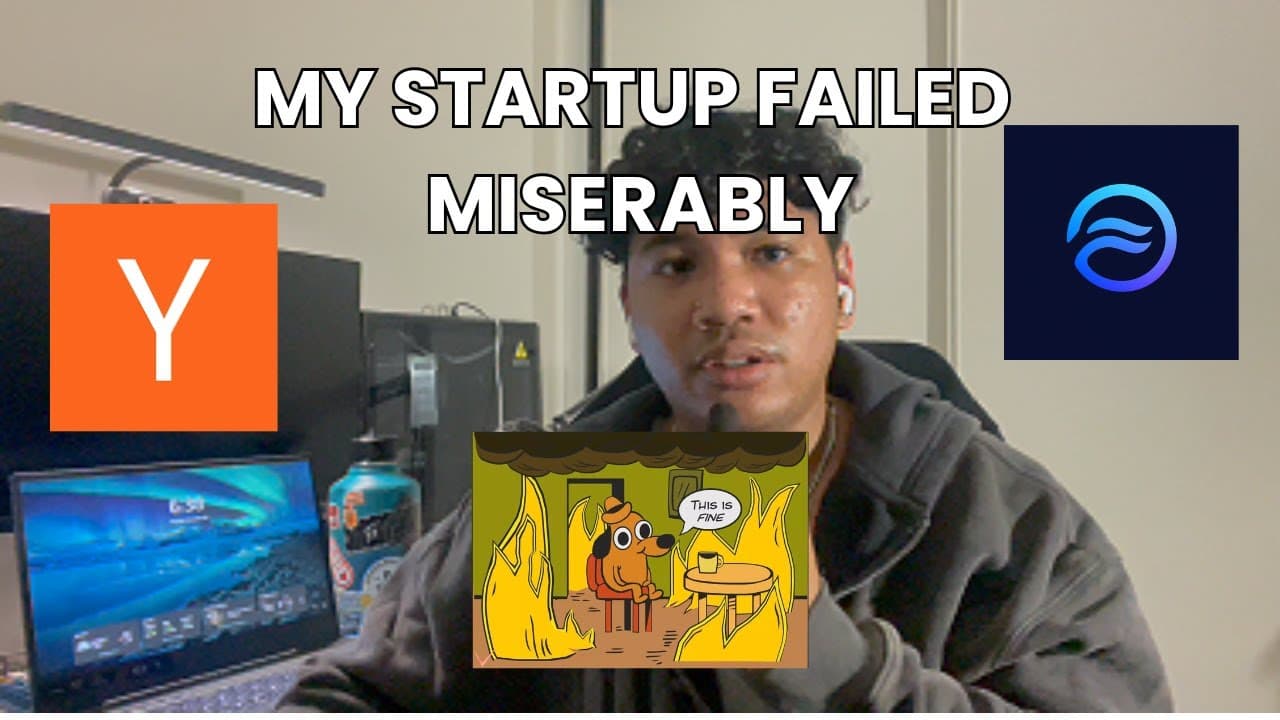
The "Build It and They Will Come" Trap
If you are a developer, you know the feeling. You get an idea, you open VS Code, and you disappear for weeks. You tell yourself that if the code is clean and the UI is slick, the users will just... appear.
This past year, I fell hard into that trap.
In March, I came up with an idea called Zenergy. As a Gen Z student, I was struggling with burnout and time management—not because I didn't know what to do, but because I was overfilling my plate. I wanted to build a tool that prioritized tasks based on energy levels and mood, rather than just deadlines.
It was a problem I experienced personally, so I assumed everyone else would want my solution. I dedicated July through August—my entire summer break—to building Zenergy from the ground up.
5 Months. 0 Users.
Fast forward to September. I have a codebase, a landing page, and a product. But I have zero real users.
Looking back, my failure wasn't technical. I didn't fail because I couldn't center a div or because my database schema was wrong. I failed because I skipped the most important part of a startup: Validation.
Mistake #1: The "Friend Feedback" Loop
The biggest mistake I made was relying on my friends for user research.
When I started, I interviewed my friends. I asked them about their task management problems. They nodded, agreed, and told me my idea sounded "cool."
Here is the hard truth I learned: Friends are not users.
Friends want to be supportive. They will give you false positives because they care about you, not your product. I was getting dopamine hits from their validation, thinking I was on the right track. But I wasn't talking to strangers on the internet who owed me nothing. I wasn't facing the harsh reality of the market.
What I should have done:
- Posted on Reddit and Discord communities before writing code.
- Talked to people who actually hated their current todo apps.
- Ignored the "nice" feedback and looked for the "will you pay for this?" feedback.
Mistake #2: Trying to Be "Him"
I thought I could be the solo founder who does it all. I wanted to be the Engineer, the UI/UX Designer, the Head of Marketing, and a full-time Computer Science student applying for internships.
I thought I could balance it all. I thought I was "Him."
I wasn't.
By the time the new semester started, I was drowning. I was trying to market Zenergy while studying for exams and preparing for interviews. By dividing my energy into five different buckets, I ensured that I would fail at the one that required the most momentum: the startup.
The Pivot: Code < Marketing
I don't regret the last 5 months. It was a humbling reality check that I needed.
Going into the new year, my approach is flipping 180 degrees. I realized that as a technical founder, my weakness isn't building—it's selling. I am comfortable in the code editor, but I am terrified of the marketing funnel.
For my next app, I am not touching a line of code until I have an audience. I’m going to focus on:
- Content Creation: getting more reps in on social media (even if it's just 1-2 times a week).
- Community: finding where the users actually hang out (Discord, Product Hunt).
- Communication: getting better at explaining the problem, not just showing off the solution.
If you are a student builder or an indie hacker, take my advice with a grain of salt, but learn from my very obvious mistakes. Don't build in a silo. Talk to users. And please, don't ask your friends if they like your app.
(Watch the full video reflection below)